


Learn about Eagle Eye Innovations and the people at the heart of the organisation.

Once we had moved into our new offices, we suddenly felt like we were growing and things we’re getting serious. There had been some changes in the Senior Leadership Team (SLT) and some additions in key areas in the Engineering Management footprint and now it was time to get the company on a war footing for the inevitable growth that would follow.
It was evident that the short term spiral projects we were engaged upon, whilst enough to bring in some revenue to continue the iterative engineering effort to date, wouldn’t be enough to get new investment on the hook and support sustainable growth. We needed a renewed commercial strategy with a solid engineering plan in place to drive it. It was, in effect, a stabalisation, a check and balance before pivoting off in a new direction and this involved a lot of strategy meetings and workshops to try and understand where we were and where we might be going on this crazy journey.
As we were not yet under contract with our intended first customer, the UK MoD, we decided to ‘focus on focus’ and archive the vast majority of existing R&D projects, even the ones that had real commercial potential. That focus was on an uncrewed aviation product that meant we were, whether we liked it or not, not just an autonomous technology concern but an aviation company – more on that later. In the meantime though, recognising that the ‘magnificent men in their flying machines’ approach was unlikely to win over the UK Defence Procurement people, we adopted Model Based Systems Engineering (MBSE) , an industry recognised way to conduct complex engineering using first principles from the ground up. As the Quality Manager for the business this was very pleasing, but only in that I knew it was a probably a good quality move, not because I actually understood, at that time, what MBSE was all about. I recall exiting the first briefing on MBSE with what colleagues described as the same look a goat might have staring at lightning on a rainy horizon. A blend of awe, wonder and bemusement. Making these complex principles happen needs Suitably Qualified and Experienced People (SQEP) and we set out on an ambitious growth plan to get them in to the company.
Recruiting…..recruiting…..recruiting…….here goes then. Firstly, it is much more time-consuming activity in a startup than I imagined. It started with defining a strategy for specific roles within my team, developing and releasing a job description, managing the multitude of questions and random CV’s from interested applicants on LinkedIn and then down selecting candidates for interview. I interviewed a varied range of characters from the greyest man in Europe (could talk a glass eye to sleep) to a person that I have decided is in my top 3 people I have met who is ‘most likely to turn out to be a prolific serial killer’. I even had one candidate who insisted on a Face 2 Face interview (Zoom and Teams were contagious by then) and then proceeded to admit that he knew nothing about the main role requirements, had done no preparation, openly admitted to grossly lying on his CV and then simply stated his strategy was to win me over with his charisma! It is, so far at least, the only interview I have stopped mid-process, swiftly followed by a large nightclub doorman style ejection from the building. In line with HR practices and to avoid any Freedom of Information requests that might reveal embarrassing language, I resisted the urge to enter what I really wanted to say and simply said, ‘not suitable’……!
We were in the depths of the COVID19 lockdowns by then and company-wide communications started to become a challenge so we implemented a new, weekly 30 min show and tell with each department getting an opportunity to outline what they were all about. The quality of these varied, some were informative, slick and 29 mins long and some were the other end of that scale. One brief consisted of a deluge of minute technical detail delivered in a monotone voice and would still be going if it hadn’t been for one of the execs waking up, switching their camera on and throwing in a metaphorical ‘Zoom towel’.
We careered onwards through rounds of design phases and numerous engineering signoffs which, in many cases felt like they may have been more effective if they were delivered in an Amazonian Indian language only spoken in one village in the world. The engineering process had taken a step change in the right direction and we knew we had made the right decision to do that. We were evolving into a team that started to become more than the sum of its parts.
Next episode – Process, Process, Process…
– Craig Lippett, Head of Technical Services
News
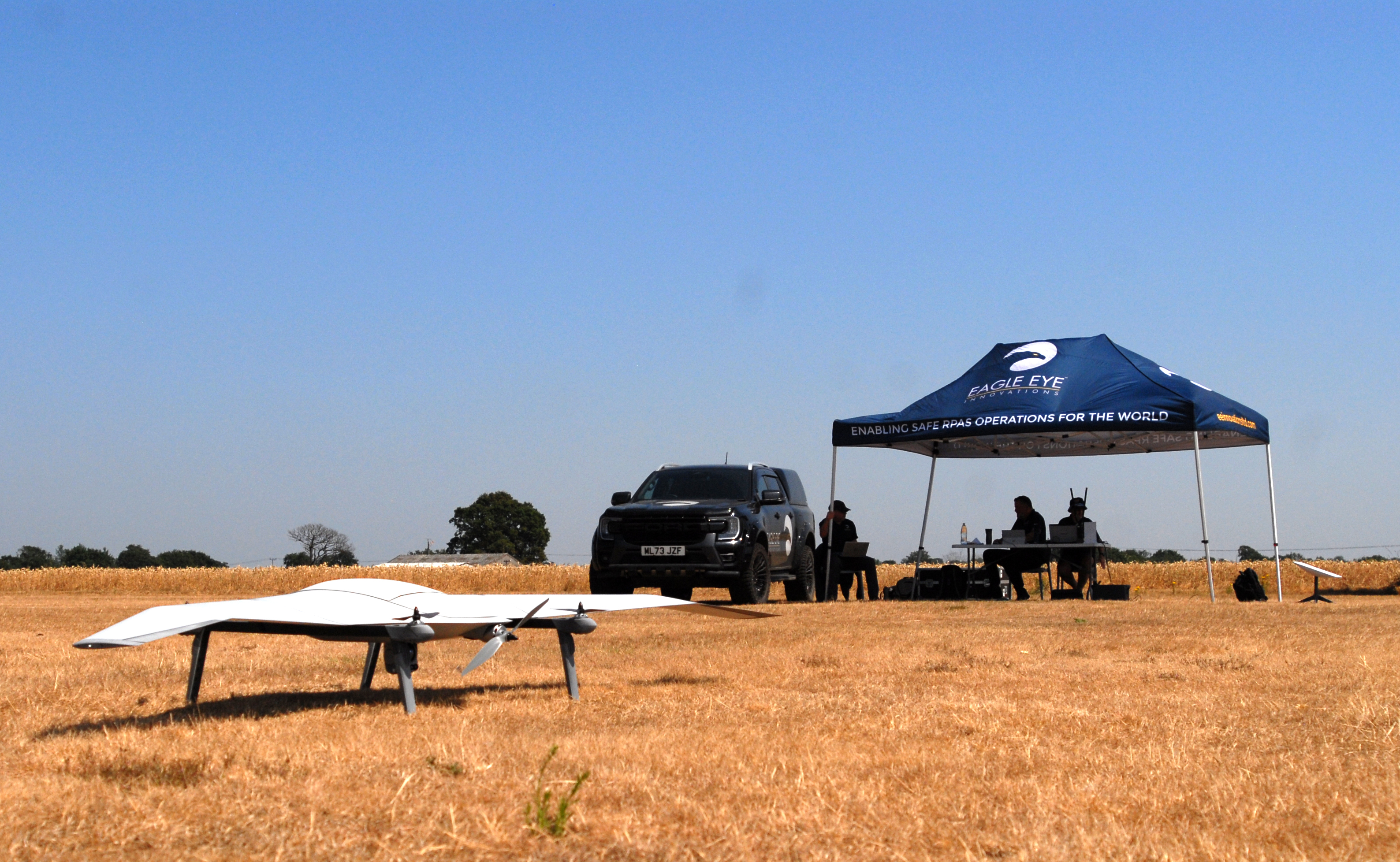
Eagle Eye Innovations (EEI) has been granted an Operational Authorisation by the UK Civil Aviation Authority (CAA), marking a significant milestone in the company’s development of advanced BVLOS operations and its future RPC-L2 training and assurance capability. The authorisation follows... Read more
News
Parliamentary launch highlights role of regional airports in delivering the UK’s future flight ambitions Industry leaders, policymakers and aviation stakeholders gathered in Parliament today to launch a new vision for accelerating the UK’s future flight economy through the creation of... Read more
News
The UK’s £5 billion investment in drones and autonomous systems represents a major shift in defence capability. However, technology alone is not enough. Success depends on skilled personnel, robust operating frameworks, and effective integration into real-world operations. In this article we'll explore how defence organisations can turn drone investment into scalable operational capability, and how Eagle Eye Innovations helps bridge the gap between strategy, training, and deployment to deliver mission-ready outcomes.
News
Eagle Eye Innovations partners with Capytech UK to revolutionise drone training through a powerful, scalable LMS for modern aviation professionals.
News
ARPAS‑UK members can access a 10% discount on Eagle Eye Innovations’ RPC-L1 and future RPC-L2 training, offering accredited, professional drone pilot development.
Case Studies
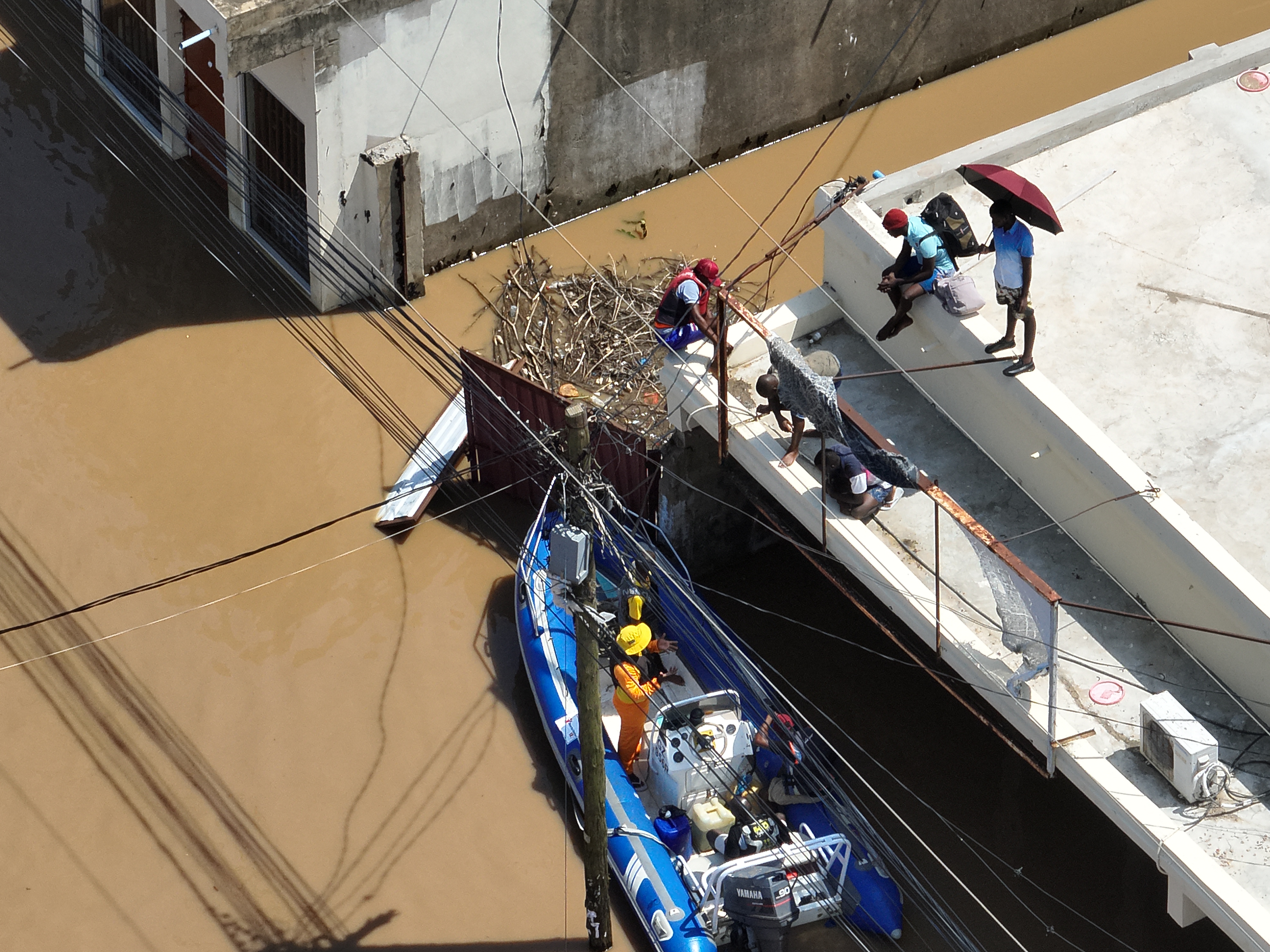
When devastating floods struck Mozambique in January 2026, UK International Search and Rescue (UKISAR) teams were deployed to operate in extreme and inaccessible conditions. Four Kent Fire and Rescue Service Technical Rescue firefighters played a vital role, using drone technology to support life‑saving missions across vast flood plains.




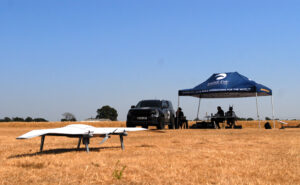
You need to have an RPC-L1 Aeroplane qualification to begin this course, as this will build upon the fundamentals of fixed wing flying to convert you to type on our impressive DeltaQuad Evo RPAS. What’s more, you will also learn how to use the exceptional Auterion Mission Planner, which is the brains of the operation when using DeltaQuad. This is a VLOS course only, although we have the ability to further expand on this into the BVLOS environment, provided the correct regulatory approvals are established. Experience this cutting-edge VTOL RPAS now and let us show you how it can further benefit your operations.
Our new 1-day Observers course is designed to expand your RPAS crewing capabilities and de-risk more complex operations through the provision of professionally qualified RPAS safety observers. Utilising proven aviation standards and procedures, our professional and
experienced instructors will guide you through the fundamentals of Crew Resource Management, crew communications, RPAS control and coordination and give you the practical experience you need to maximise the benefits of your RPAS for VLOS operations and beyond.
If you hold a valid GVC and want to convert to an RPC-L1 qualification in the same category of UAS, under the CAA you are exempt from conducting the theory elements of the course and may progress directly to the practical elements. Therefore, you simply need to book
onto either our conversion course or the practical days of a full RPC-L1 course (provided there is capacity to fit you in). This will provide you with the minimum of 2-hours flight instruction before you attempt the flight assessment. Proof of GVC validity will be required prior to conducting the training.
This course is designed to qualify you in either Rotorcraft or Aeroplane, noting that you only need to conduct the practical aspects of the course, provided you have successfully passed the full Level 1 course in the other discipline.
(Please note this does not include conversion onto our DeltaQuad platform; that is a bespoke course in its own right).
 Make an enquiry