


Learn about Eagle Eye Innovations and the people at the heart of the organisation.


Latest news:
Parliamentary launch highlights role of regional airports in delivering the UK’s future flight ambitions Industry leaders, policymakers and aviation stakeholders gathered in Parliament today to launch a new vision for accelerating the UK’s future flight economy through the creation of... Read more

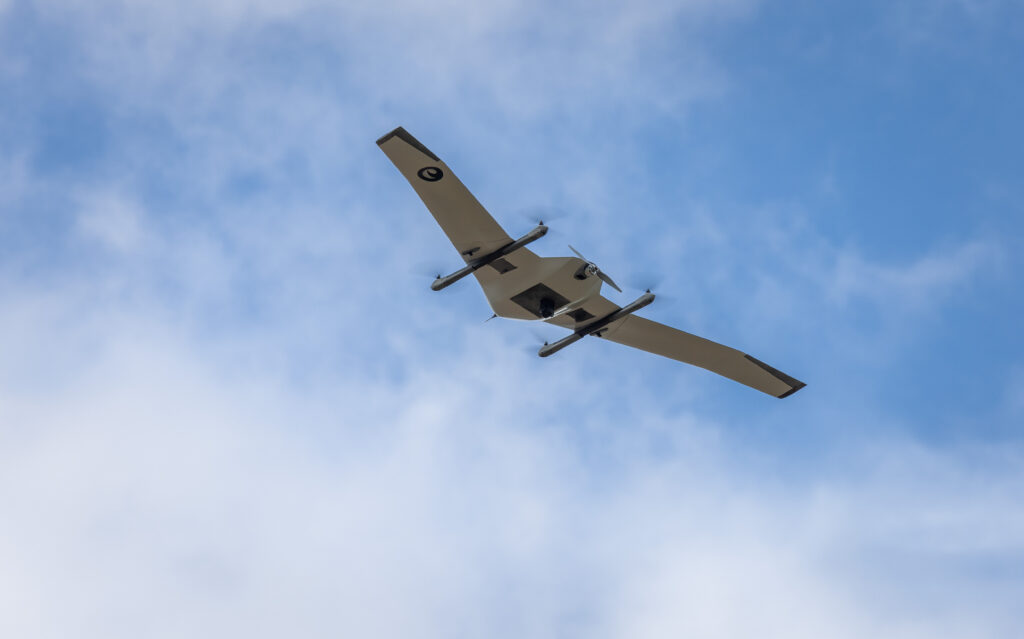
The UK Uncrewed Aerial System (UAS) industry is evolving rapidly, and with it comes a greater emphasis on pilot competence, safety, and standardisation. As operations extend beyond simple Visual Line of Sight (VLOS) flying, pilots need the qualifications that prove they can operate competently, confidently and in alignment with the Civil Aviation Authority’s (CAA) regulatory framework, as it looks to bring uncrewed platforms in-line with crewed aviation standards.
The next step in this progression is the Remote Pilot Certificate – Level 2 (RPC-L2) qualification.
In this post we’ll be explaining what the RPC‑L2 is, who it’s for, what it allows you as a UAS pilot to do, and why Eagle Eye Innovations, the UK’s first CAA‑approved Recognised Assessment Entity for Pilot Competency (RAE(PC)), should be your training provider of choice.
The RPC‑L2 sits within the CAA’s Remote Pilot Competency (RPC) Framework, which is designed to modernise and standardise UAS pilot training across the UK. The framework currently includes Levels 1–3, with each level being aligned to increasing operational complexity. The future training requirements beyond RPC-L3 are being defined by the CAA with the aspiration for a Level 4 qualification or Remote Pilot License to reflect traditional aviation training systems.
RPC‑L2 represents an important step within the new framework and is aimed at remote pilots preparing to move from basic VLOS operations toward more demanding missions, including localised Beyond Visual Line of Sight (BVLOS) flights. These operations typically take place within an Atypical Air Environment (AAE), where air traffic is minimal and risk can be managed through structured planning and procedures.
CAA guidance within the RPC Framework states the Level 2 qualification enables:
This marks a significant step up from Level 1 and opens the door to more advanced commercial operations, advanced mission profiles, and progression to Level 3 BVLOS flying. As a reminder, a remote pilot cannot proceed to the next Remote Pilot Certificate level until they have completed the preceding level and accrued the mandated flight hours.
To begin Level 2, pilots must:
The RPC‑L2 syllabus is designed to build the theoretical and practical knowledge required for safe, compliant, and effective BVLOS‑capable operations. Training includes:
Successful pilots are then able to progress toward Level 3 certification and undertake more complex BVLOS operations in the future.
The CAA’s new competency framework is reshaping how remote pilot qualifications align with modern drone regulations. From January 2026 onwards, the CAA will require UK drone operators to evidence their competency, linked directly to operational risk classification and airspace use. Level 2 will quickly become an essential credential for any pilot aiming to remain competitive within commercial, emergency service, infrastructure, or inspection sectors.
Additionally, RPC‑L2 is the first qualification level that introduces BVLOS privileges, an area that historically required lengthy, complex approvals.
The CAA’s Remote Pilot Competency Level 2 qualification is a cornerstone credential for organisations or ambitious drone pilots wishing to expand into BVLOS operations, take on more specialised missions or future‑proof your skills against evolving regulations, RPC‑L2 is the logical next step.
With Eagle Eye Innovations standing as the UK’s first CAA approved RAE for Pilot Competency, backed by exceptional student reviews, industry leading training, and unmatched operational experience, there is no better place to gain this qualification.
If you’re ready to elevate your drone career, the path to RPC-L2 starts with Eagle Eye Innovations.

Eagle Eye Innovation’s Centre of Excellence at South Scarle on the Lincolnshire / Nottinghamshire border.
No. Under the CAA guidelines you’ll need to complete a GVC to RPC-L1 bridging course, which as a current GVC holder, will enable you to avoid retaking much of the theory part of the programme, focussing on practical pilot competency. Eagle Eye Innovations has a GVC to RPC bridging course, with more information found here.
You’ll need to have completed the RPC-L1 and have accrued 50 flying hours on an uncrewed platform of the same class (fixed wing or rotary) conducted in the specific category. These hours will need to be documented in a recognised flight log and shared with Eagle Eye Innovations prior to the start of your course.
The RPC-L2 programme at Eagle Eye Innovations comprises the following;
Air Risk Class (ARC-a) is the lowest classification within the Air Risk Class (ARC) system, indicating the minimal risk of mid-air collision between manned and unmanned aircraft. The ARC-a classification is determined based on the operational volume, airspace collision risk mapping and strategic mitigations applied to reduce the risk of mid-air collisions. It is for this reason that RPC-L2 training will be held at our South Scarle flight site.
Specific Operations Risk Assessment (SORA) methodology, is used to assess and mitigate the risks associated with some drone operations. Eagle Eye Innovations can provide training on Mastering UK SORA if required.
An AAE is a volume of airspace that is rarely or never used by other aviation users. It is not a separate class of airspace but can exist within any airspace class. BVLOS within an AAE must adhere to all rules that apply to drones within that airspace classification, including any applicable restrictions.
Should you or our instructors deem that you have not reached the requisite competency standard to undertake the assessment, additional flight training hours can be purchased on a per hour basis, at an agreed time, to enable the student to meet the required competency standard.



Do you have a question? We are here to help. Submit your details below and we'll call you back. (Mon-Fri 9am - 5.30pm)
You need to have an RPC-L1 Aeroplane qualification to begin this course, as this will build upon the fundamentals of fixed wing flying to convert you to type on our impressive DeltaQuad Evo RPAS. What’s more, you will also learn how to use the exceptional Auterion Mission Planner, which is the brains of the operation when using DeltaQuad. This is a VLOS course only, although we have the ability to further expand on this into the BVLOS environment, provided the correct regulatory approvals are established. Experience this cutting-edge VTOL RPAS now and let us show you how it can further benefit your operations.
Our new 1-day Observers course is designed to expand your RPAS crewing capabilities and de-risk more complex operations through the provision of professionally qualified RPAS safety observers. Utilising proven aviation standards and procedures, our professional and
experienced instructors will guide you through the fundamentals of Crew Resource Management, crew communications, RPAS control and coordination and give you the practical experience you need to maximise the benefits of your RPAS for VLOS operations and beyond.
If you hold a valid GVC and want to convert to an RPC-L1 qualification in the same category of UAS, under the CAA you are exempt from conducting the theory elements of the course and may progress directly to the practical elements. Therefore, you simply need to book
onto either our conversion course or the practical days of a full RPC-L1 course (provided there is capacity to fit you in). This will provide you with the minimum of 2-hours flight instruction before you attempt the flight assessment. Proof of GVC validity will be required prior to conducting the training.
This course is designed to qualify you in either Rotorcraft or Aeroplane, noting that you only need to conduct the practical aspects of the course, provided you have successfully passed the full Level 1 course in the other discipline.
(Please note this does not include conversion onto our DeltaQuad platform; that is a bespoke course in its own right).
 Make an enquiry