



Learn about Eagle Eye Innovations and the people at the heart of the organisation.


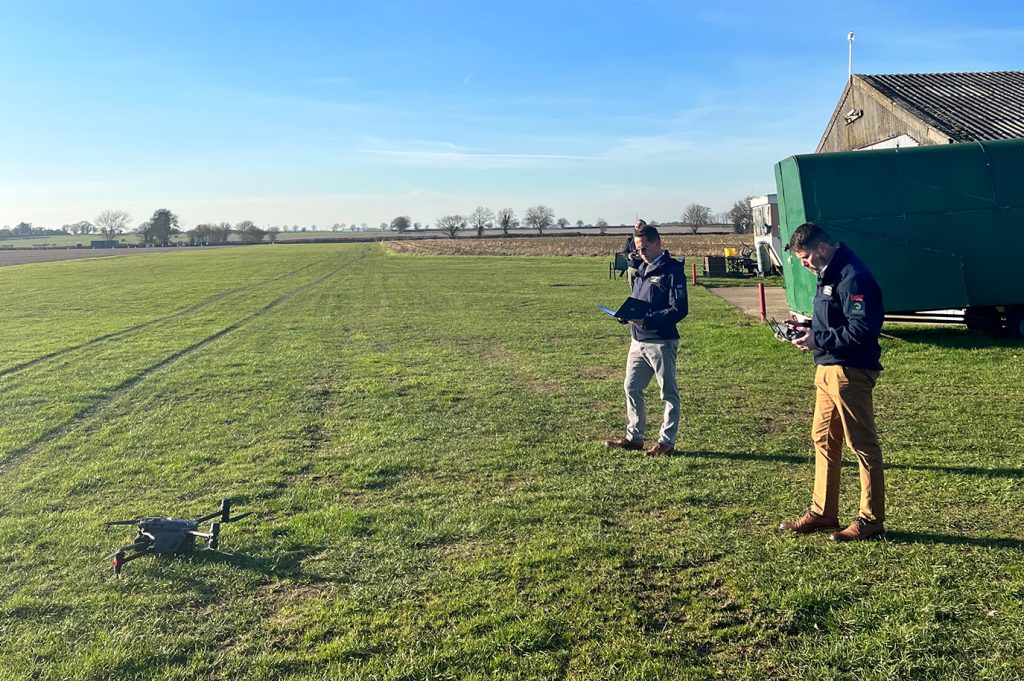
Drone pilots seek to operate in ways which require greater levels of safety assurance, thereby enabling more operational freedom, such as undertaking high-risk operations, flying larger drones, flying in specific locations and to undertake Beyond Visual Line of Sight (BVLOS) operations. Facilitation includes the generation of Operating Safety Cases (OSCs), the Specific Operating Risk Assessment (SORA) methodology and, subject to system complexity, greater levels of safety assurance up to more robust certification standards including risk assessments and incident reporting.
The OSC is required by the CAA for certain drone operations, and is designed to provide a detailed analysis of the drone operation and it’s associated hazards and risks, and then outline a plan to mitigate these risks to an acceptable level. This is a workflow that produces a document set (as detailed in CAP722A) comprising Volume 1 (Operations), Volume 2 (Systems Technical Specifications) and Volume 3 (Safety Risk Assessment), but may also include other policy documents and other types of evidence. The result is a CAA issued Operational Authorisation (OA) – valid for one year – which allows the operator to fly under the provisions and limitations set out in the OSC.
The Specific Operating Risk Assessment (SORA) is an emerging methodology that is scheduled to replace OSC’s in late 2024. It introduces a new, more comprehensive methodology designed to provide quantitative evaluation of risk in two specific areas, Ground Risk Class (GRC) and Air Risk Class (ARC). SORA is already being used in the EASA member states and EEI, having already supported SORA development in European operations, is well placed to deliver SORA generation to it’s wider client base.



Do you have a question? We are here to help. Submit your details below and we'll call you back. (Mon-Fri 9am - 5.30pm)
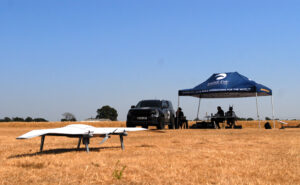
You need to have an RPC-L1 Aeroplane qualification to begin this course, as this will build upon the fundamentals of fixed wing flying to convert you to type on our impressive DeltaQuad Evo RPAS. What’s more, you will also learn how to use the exceptional Auterion Mission Planner, which is the brains of the operation when using DeltaQuad. This is a VLOS course only, although we have the ability to further expand on this into the BVLOS environment, provided the correct regulatory approvals are established. Experience this cutting-edge VTOL RPAS now and let us show you how it can further benefit your operations.
Our new 1-day Observers course is designed to expand your RPAS crewing capabilities and de-risk more complex operations through the provision of professionally qualified RPAS safety observers. Utilising proven aviation standards and procedures, our professional and
experienced instructors will guide you through the fundamentals of Crew Resource Management, crew communications, RPAS control and coordination and give you the practical experience you need to maximise the benefits of your RPAS for VLOS operations and beyond.
If you hold a valid GVC and want to convert to an RPC-L1 qualification in the same category of UAS, under the CAA you are exempt from conducting the theory elements of the course and may progress directly to the practical elements. Therefore, you simply need to book
onto either our conversion course or the practical days of a full RPC-L1 course (provided there is capacity to fit you in). This will provide you with the minimum of 2-hours flight instruction before you attempt the flight assessment. Proof of GVC validity will be required prior to conducting the training.
This course is designed to qualify you in either Rotorcraft or Aeroplane, noting that you only need to conduct the practical aspects of the course, provided you have successfully passed the full Level 1 course in the other discipline.
(Please note this does not include conversion onto our DeltaQuad platform; that is a bespoke course in its own right).
 Make an enquiry