



Learn about Eagle Eye Innovations and the people at the heart of the organisation.


first of it’s kind 3 day course
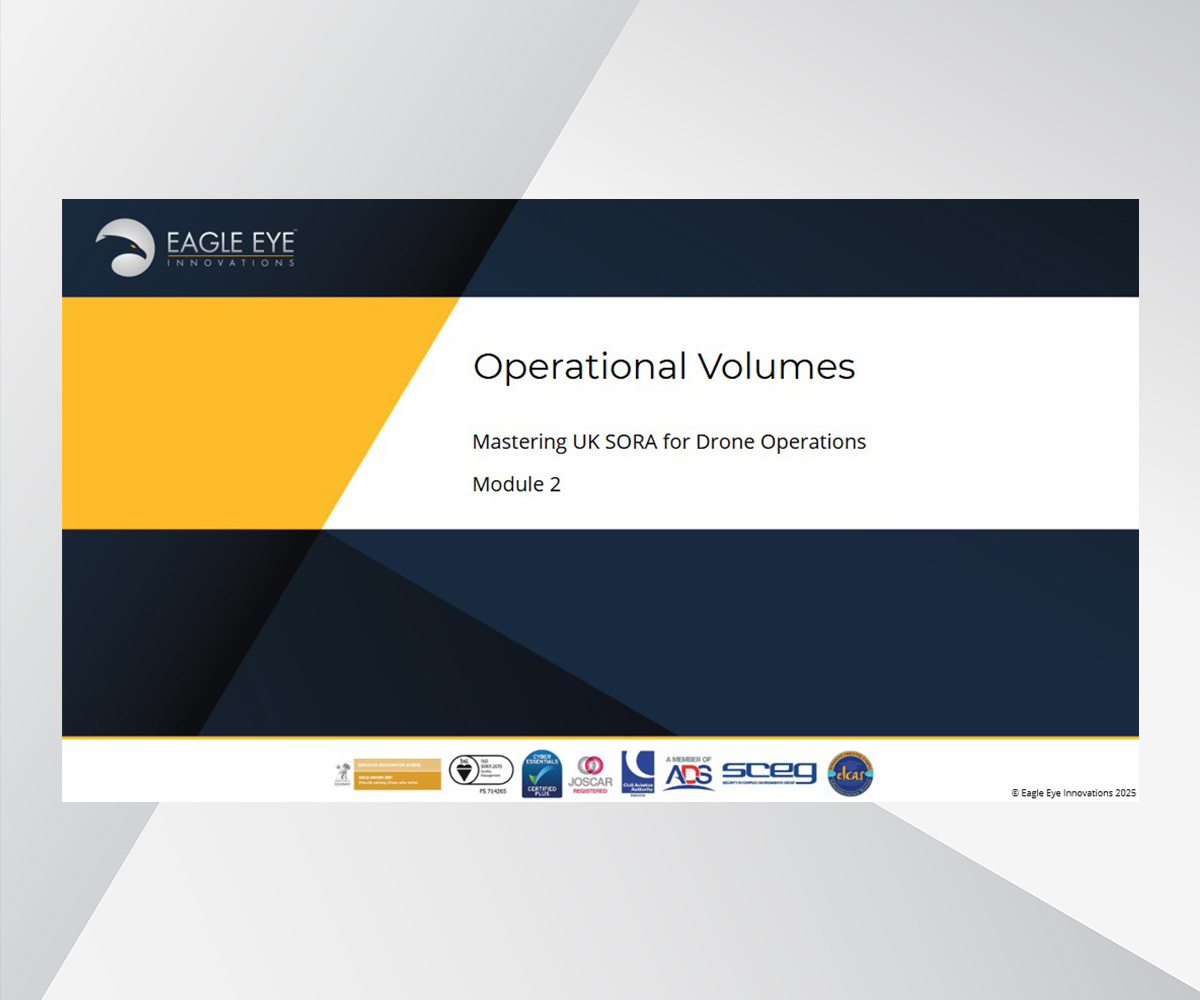
The Mastering UK SORA for Drone Operations course is our new course, offering a comprehensive overview of the UK SORA methodology, the first of its kind in the UK. The course is designed for a wide array of UK and International organisations seeking to operate Remotely Piloted Aircraft Systems (RPAS) in complex operations in the Specific Category in use cases such as Beyond Visual Line Of Sight (BVLOS) operations, dropping of articles, operations in congested areas, RPAS with a maximum Take Off Mass (MTOM) of greater than 25 Kgs and swarming operations.
Delivered by a market leading Safety Practitioner SME, the course is 3 days duration and delivers a step-by-step workflow through the 14 step SORA submission process with advice on the intricacies of interpreting the SORA policy to ensure a successful application. Theoretical, classroom-based training delivery forms the core of the course beginning with insights into tailoring applicants Concept of Operations (ConOps) to optimise successful entry into the SORA pathway. Follow-on steps will be covered such as calculating the Ground Risk Class (GRC), Air Risk Class (ARC), determining the SAIL category and examining compliance against the Operational Safety Objectives (OSO’s). Importantly, students will conduct practical confirmation through case studies which enable students to put theoretical learning into practice with worked examples.
Candidates will be expected to complete a focused amount of pre-course reading and will receive a comprehensive Student handbook and post course support advice.
Course completion will place the students in a strong informed position to understand and successfully complete an application in what is a step change in risk methodology in the UK and Internationally. A key stepping stone towards more complex operations and unlocking the full potential of RPAS.
We also offer a SORA Support Service by partnering with clients and providing them with SORA SMEs to advise and assist with the complete UK SORA application process.
Excellent course. Tim was able to deliver all content in a way that made it easy to understand and more importantly, remember. The theory input provided a great starting point and ensured a seamless transition to the practical art of aviating the drones. The aspiration of earning “Gold Wings” is a fun incentive to work hard. Well done EEI Leicester Police
Excellent communication and dedication to ensure information was digestible and easy to understand. Practical approach and very friendly. A2 CofC Student
The whole team was an absolute pleasure to work with, friendly and approachable with a good sense of humour. University of the West
The course was very good, one to one remote access worked very well. Online A2 CofC Student
I really enjoyed the course and both instructors Tim and Matt made learning fun which helped with me passing the course. I had very little knowledge of drone legislation or flying prior to the course so it shows the high quality of teaching which helped me gain my golden wings and gain a 100% score. Zeta Central Student
Excellent course with excellent instruction. Gally was very personable and pitched the course at the right level. The theory element was quite technical but was made easier by the instruction. none of the course material was laboured, but there was enough explanation to check understanding. The practical element was made easy because of the quality of training. all together, an excellent course. would definitely use EE Innovations again and would have no hesitation in recommending you as a training provider. Maidstone Borough Council

Mastering UK SORA for Drone Operations is a three-day classroom-based training programme designed to provide a practical understanding of the UK Specific Operations Risk Assessment (SORA) methodology.
Delivered by experienced Safety Practitioner Subject Matter Experts, the course takes delegates through the complete 14-step SORA process, explaining the principles, decisions, calculations and evidence requirements involved in developing a successful SORA application.
The programme is designed to help delegates understand both the methodology itself and the regulatory expectations that sit behind it.
The course is based on the latest UK Specific Category framework and incorporates the current Acceptable Means of Compliance (AMC) and Guidance Material (GM) adopted by the UK Civil Aviation Authority under UK Regulation (EU) 2019/947, including ORS9 CAA Decision No. 60 – Adoption of AMC & GM to UK Regulation (EU) 2019/947.
Delegates are introduced to the terminology, methodology, compliance expectations and evidence requirements contained within the latest regulatory material and shown how they are applied during the assessment of a SORA application.
The course also examines the relationship between the UK framework and the key principles contained within JARUS SORA v2.5, helping delegates understand where those concepts originate and how they continue to influence the UK approach.
No.
Whilst delegates will learn how to complete a SORA application, the primary objective is to develop an understanding of the methodology and the risk-based thinking that underpins it.
The course is specifically designed to unpack complex guidance material, explain the reasoning behind regulatory requirements, and encourage discussion around the practical application of the methodology.
Participants are encouraged to challenge assumptions, examine different approaches and explore the intent behind the guidance rather than simply learning how to populate templates.
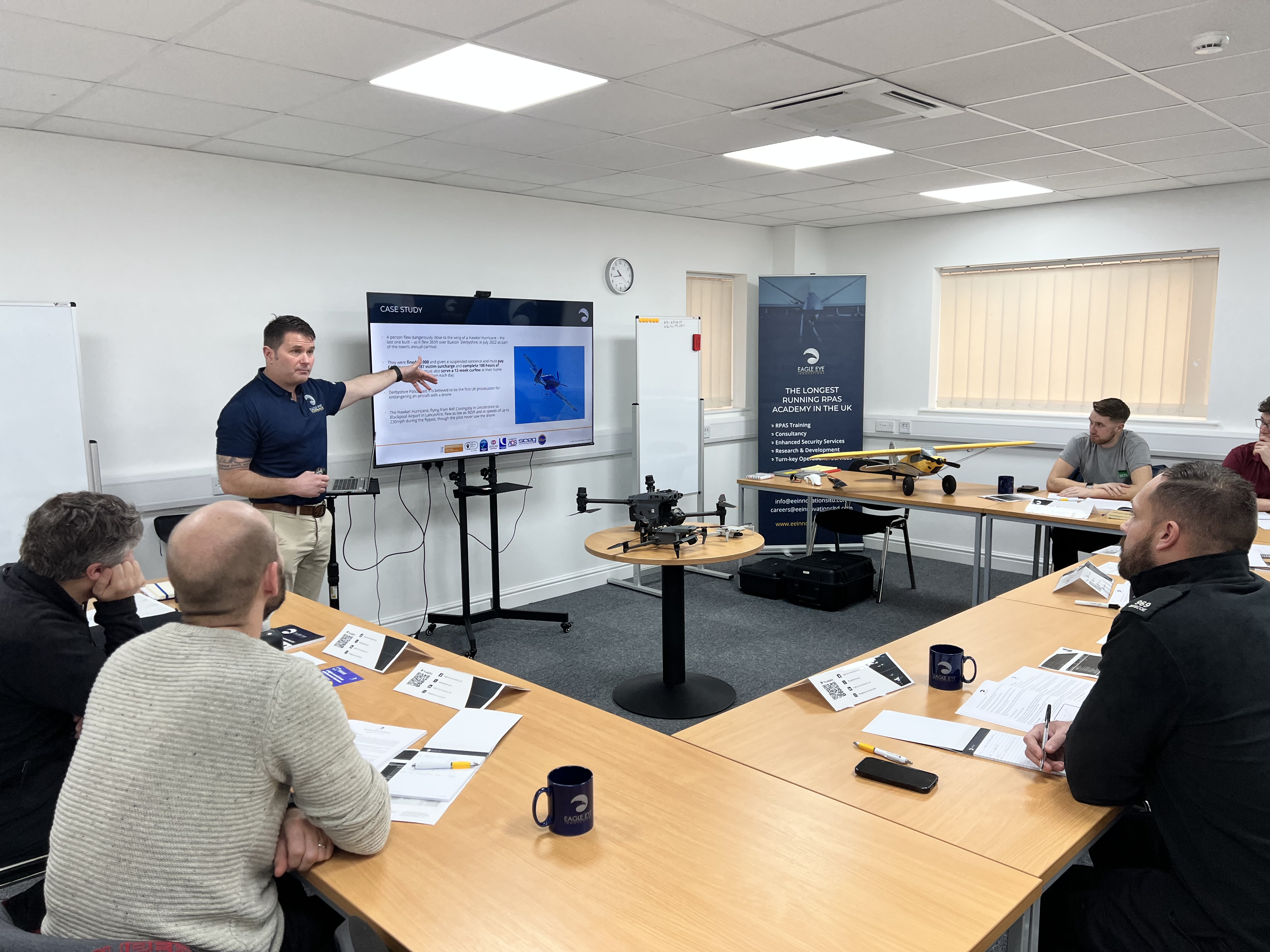
The programme is delivered through interactive, face-to-face classroom instruction.
The classroom environment is deliberately structured to encourage discussion and collaboration. Many aspects of SORA require interpretation and judgement, and delegates are given the opportunity to work through complex scenarios with instructors and fellow participants.
This format allows difficult topics to be explored in greater depth than is typically possible through self-study or online learning.
The course package includes:
Refreshments throughout the course
The course is suitable for organisations seeking to conduct operations within the UK Specific Category and is particularly relevant to:
The course is appropriate for both UK and international operators.
No.
No prior safety case experience is required. The course has been structured to build knowledge progressively from first principles through to practical application.
A focused package of pre-course reading will be provided to ensure delegates arrive with a basic understanding of the terminology and regulatory landscape.
The programme covers both the policy and technical aspects of SORA, including:
Delegates are taken through the complete 14-step methodology and shown how the individual elements interact to form a coherent safety argument.
A significant proportion of the programme is dedicated to practical application.
Delegates will work through representative case studies and examples that demonstrate how the methodology is applied in real operational environments. The emphasis is placed on understanding how decisions are made, what evidence is required, and how a regulator is likely to assess a submission.
Practical exercises are used throughout the course to reinforce learning and encourage discussion.
Many organisations find that the most difficult aspect of SORA is not understanding individual requirements, but understanding how complex guidance material should be interpreted and applied.
For that reason, the course has been specifically designed to encourage open discussion and technical debate. Delegates are given the opportunity to explore challenging areas of guidance, examine alternative approaches and develop a clearer understanding of the intent behind the methodology.
The objective is not simply to provide answers, but to help delegates develop the confidence and judgement needed to apply the methodology within their own operations.
A detailed understanding of SORA is essential for organisations planning advanced or higher-risk operations, including:
The course provides the knowledge required to understand the regulatory pathway associated with these types of operations.
Eagle Eye Innovations also provides dedicated SORA support services.
Organisations can work directly with experienced SORA practitioners to obtain application reviews, technical advice, drafting support, evidence development assistance and end-to-end guidance throughout the submission process.
By the end of the programme, delegates will have a practical understanding of the UK SORA methodology, the latest UK AMC and Guidance Material, the key principles contained within JARUS SORA v2.5, and the evidence requirements associated with a modern SORA submission.
More importantly, they will understand how to interpret the methodology, apply it to real-world operations, and engage with the regulatory process with greater confidence.



Do you have a question? We are here to help. Submit your details below and we'll call you back. (Mon-Fri 9am - 5.30pm)
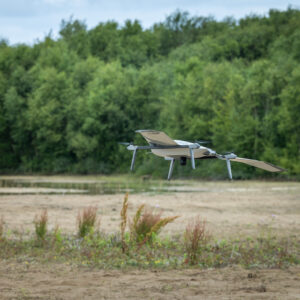
You need to have an RPC-L1 Aeroplane qualification to begin this course, as this will build upon the fundamentals of fixed wing flying to convert you to type on our impressive DeltaQuad Evo RPAS. What’s more, you will also learn how to use the exceptional Auterion Mission Planner, which is the brains of the operation when using DeltaQuad. This is a VLOS course only, although we have the ability to further expand on this into the BVLOS environment, provided the correct regulatory approvals are established. Experience this cutting-edge VTOL RPAS now and let us show you how it can further benefit your operations.
Our new 1-day Observers course is designed to expand your RPAS crewing capabilities and de-risk more complex operations through the provision of professionally qualified RPAS safety observers. Utilising proven aviation standards and procedures, our professional and
experienced instructors will guide you through the fundamentals of Crew Resource Management, crew communications, RPAS control and coordination and give you the practical experience you need to maximise the benefits of your RPAS for VLOS operations and beyond.
If you hold a valid GVC and want to convert to an RPC-L1 qualification in the same category of UAS, under the CAA you are exempt from conducting the theory elements of the course and may progress directly to the practical elements. Therefore, you simply need to book
onto either our conversion course or the practical days of a full RPC-L1 course (provided there is capacity to fit you in). This will provide you with the minimum of 2-hours flight instruction before you attempt the flight assessment. Proof of GVC validity will be required prior to conducting the training.
This course is designed to qualify you in either Rotorcraft or Aeroplane, noting that you only need to conduct the practical aspects of the course, provided you have successfully passed the full Level 1 course in the other discipline.
(Please note this does not include conversion onto our DeltaQuad platform; that is a bespoke course in its own right).


 Make an enquiry