



Learn about Eagle Eye Innovations and the people at the heart of the organisation.

Industry leaders, policymakers and aviation stakeholders gathered in Parliament today to launch a new vision for accelerating the UK’s future flight economy through the creation of Special Use Airspace and regional innovation hubs.
Hosted by Tony Vaughan MP, the event showcased how regional airports such as Lydd Airport can provide a scalable blueprint for enabling uncrewed aircraft systems, advanced air mobility and other future flight technologies to move from demonstration to safe, sustainable commercial operations.
The event featured contributions from Praful Nargund of the Good Growth Foundation, who launched a new report on the economic and strategic opportunities presented by regional aviation infrastructure, alongside perspectives from Sam O’Dwyer of Lydd Airport and Alex Kasperczyk, Chief Commercial Officer of Eagle Eye Innovations.
Speaking at the launch, Alex Kasperczyk highlighted the growing demand for facilities capable of supporting the training, testing, evaluation and assurance of emerging aviation technologies.
“Across defence, government, critical national infrastructure and commercial markets, companies need credible places where new capabilities can be trained, tested, evaluated, assured and safely introduced into service.”
He stressed that the challenge facing the sector is no longer proving the technology works, but creating the conditions needed for widespread adoption.
“This is not a solution searching for a problem. The technology is already here. The challenge is moving it from demonstration to safe, repeatable and scalable operation.”
The proposed Centre for Future Flight Innovation (CFFI) at Lydd Airport seeks to address this challenge by establishing an environment where industry, government and regulators can collaborate to accelerate capability development whilst maintaining the highest safety standards.
Eagle Eye Innovations believes regional airports represent a significant untapped national asset, capable of supporting innovation, economic growth and sovereign capability across the UK.
“Lydd Airport can provide that pathway. It offers a model for how regional airports can use their aviation infrastructure, skills and connectivity to support future flight, attract investment and create new opportunities for local communities and businesses.”
The company believes that a network of innovation-focused regional airports could help retain skills, intellectual property and operational capability within the UK while supporting government ambitions for defence, national resilience and economic growth.
“We believe facilities such as Lydd Airport can form part of a UK network that supports innovation while retaining skills, intellectual property and operational capability in this country.”
The launch comes at a time when the UK is seeking to strengthen sovereign capability, accelerate the adoption of emerging technologies and unlock investment into high-growth industries. Eagle Eye Innovations argues that creating fast-tracked pathways to safely manage and utilise Special Use Airspace would provide a practical mechanism for enabling these objectives.
Alex Kasperczyk emphasised that safety and innovation must be viewed as complementary rather than competing priorities.
“Assurance is not a brake on innovation. It is what allows innovation to scale.”
The economic impact could be substantial, with benefits extending far beyond this initiative.
“When we get this right, the benefits will extend beyond aviation: skilled jobs, inward investment, stronger supply chains, public-service capability and UK leadership in the safe adoption of future-flight technologies.”
Closing his address, Alex Kasperczyk reflected on the broader significance of the initiative.
“The future of aviation will not be defined by the technologies we invent. It will be defined by the technologies we can trust.”
The proposed Centre for Future Flight Innovation at Lydd Airport aims to demonstrate how government, industry and regional aviation infrastructure can work together to create a practical, scalable framework for the future of UK aviation, delivering economic growth, technological leadership and national resilience.
News
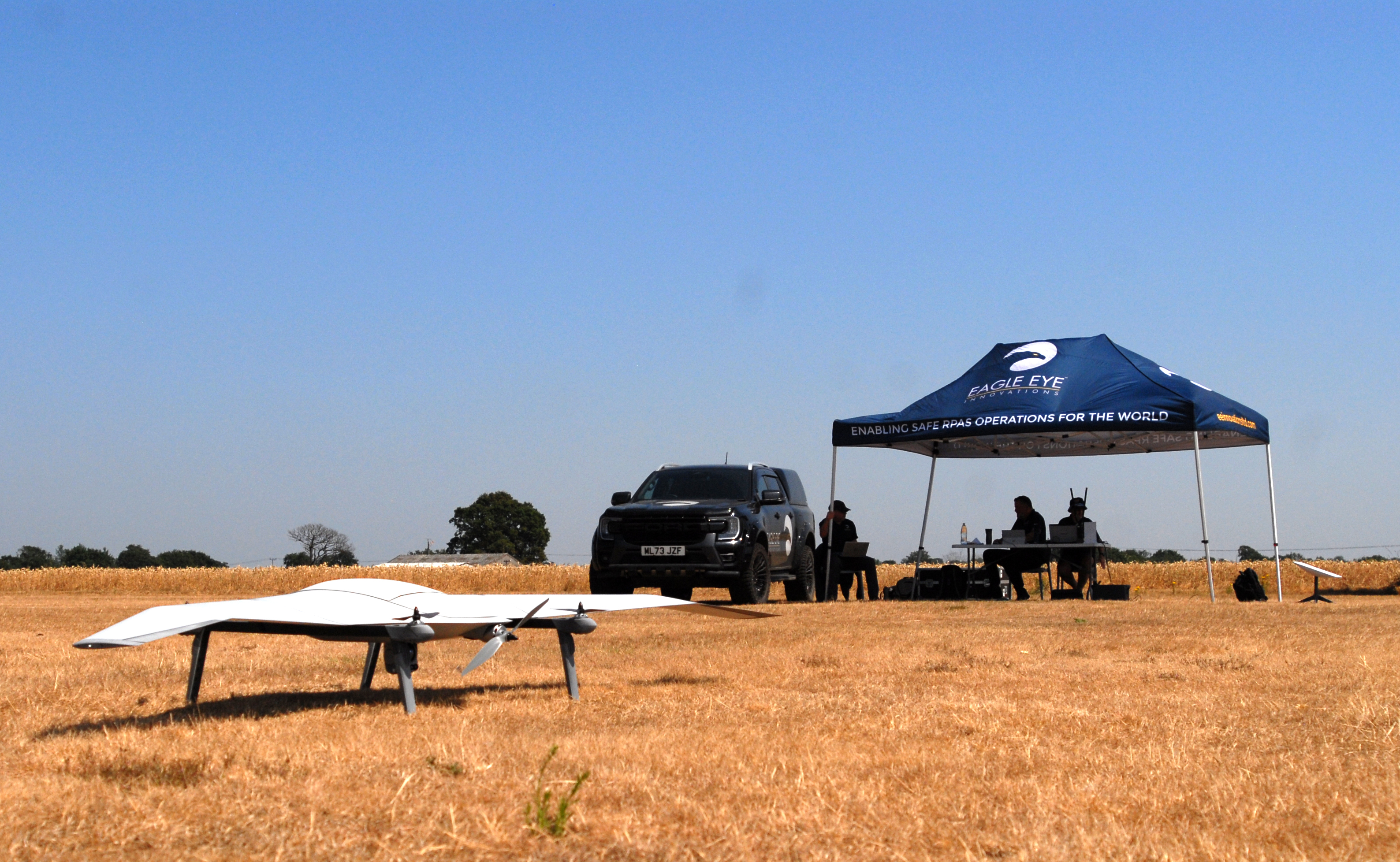
Eagle Eye Innovations (EEI) has been granted an Operational Authorisation by the UK Civil Aviation Authority (CAA), marking a significant milestone in the company’s development of advanced BVLOS operations and its future RPC-L2 training and assurance capability. The authorisation follows... Read more
News
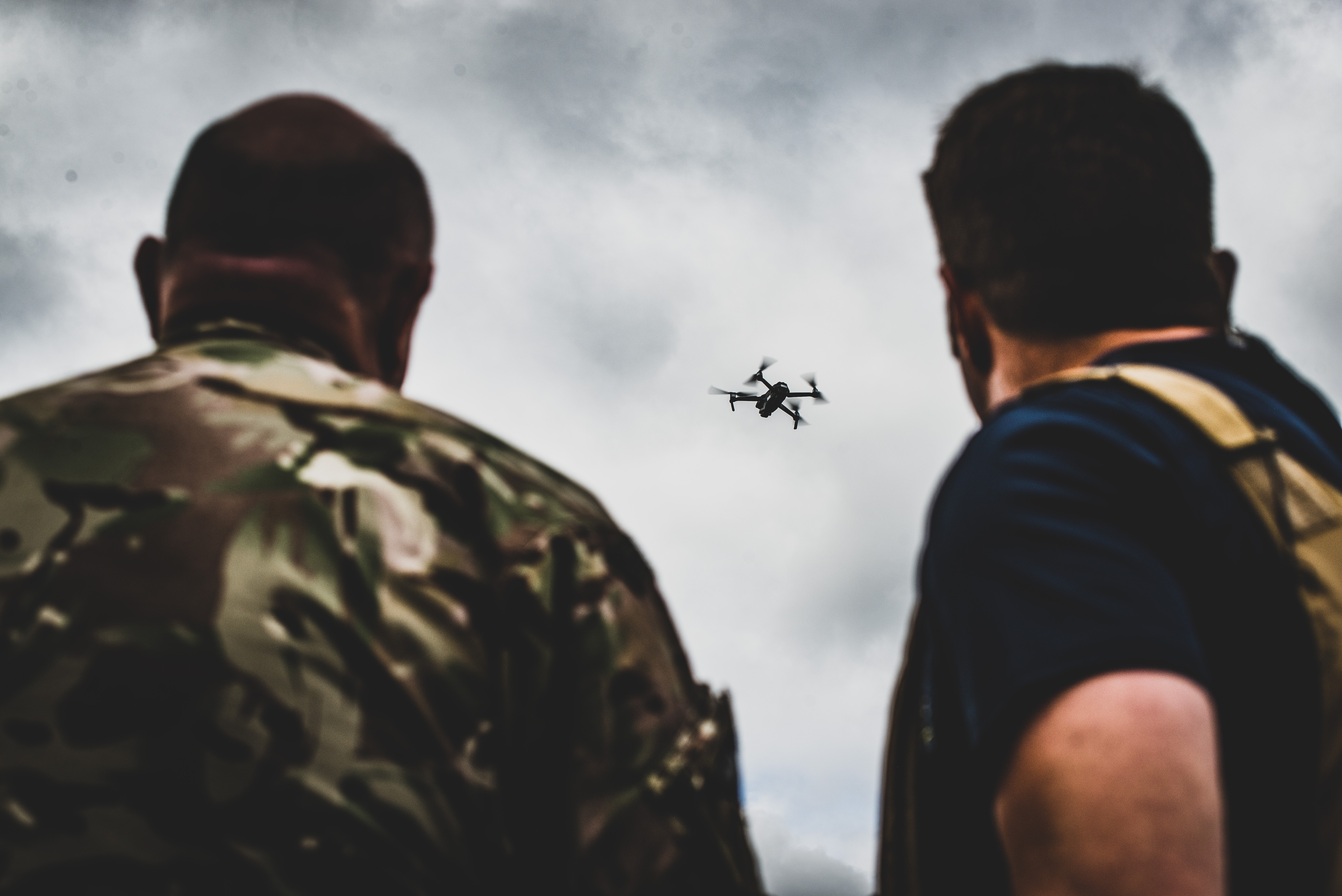
The UK’s £5 billion investment in drones and autonomous systems represents a major shift in defence capability. However, technology alone is not enough. Success depends on skilled personnel, robust operating frameworks, and effective integration into real-world operations. In this article we'll explore how defence organisations can turn drone investment into scalable operational capability, and how Eagle Eye Innovations helps bridge the gap between strategy, training, and deployment to deliver mission-ready outcomes.
News
Eagle Eye Innovations partners with Capytech UK to revolutionise drone training through a powerful, scalable LMS for modern aviation professionals.
News
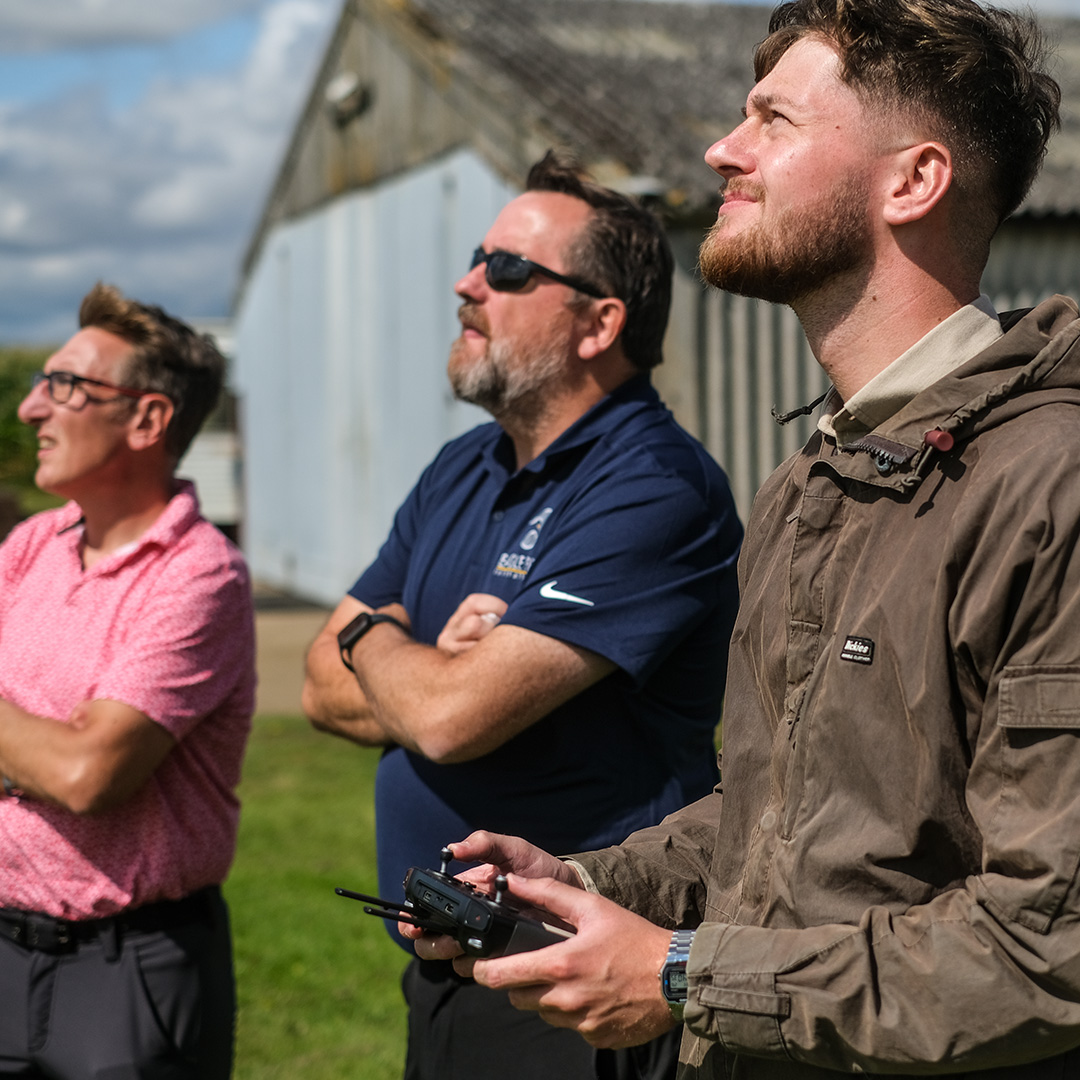
ARPAS‑UK members can access a 10% discount on Eagle Eye Innovations’ RPC-L1 and future RPC-L2 training, offering accredited, professional drone pilot development.
Case Studies

When devastating floods struck Mozambique in January 2026, UK International Search and Rescue (UKISAR) teams were deployed to operate in extreme and inaccessible conditions. Four Kent Fire and Rescue Service Technical Rescue firefighters played a vital role, using drone technology to support life‑saving missions across vast flood plains.
News
On Mon 3 Mar 2025, the UK Civil Aviation Authority (CAA) published ORS9, Decision 46, setting out the UK Specific Operations Risk Assessment (SORA) methodology as Acceptable Means of Compliance (AMC) to UK Regulation (EU) 2019/947 Article 11. The CAA... Read more







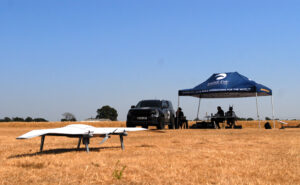
You need to have an RPC-L1 Aeroplane qualification to begin this course, as this will build upon the fundamentals of fixed wing flying to convert you to type on our impressive DeltaQuad Evo RPAS. What’s more, you will also learn how to use the exceptional Auterion Mission Planner, which is the brains of the operation when using DeltaQuad. This is a VLOS course only, although we have the ability to further expand on this into the BVLOS environment, provided the correct regulatory approvals are established. Experience this cutting-edge VTOL RPAS now and let us show you how it can further benefit your operations.
Our new 1-day Observers course is designed to expand your RPAS crewing capabilities and de-risk more complex operations through the provision of professionally qualified RPAS safety observers. Utilising proven aviation standards and procedures, our professional and
experienced instructors will guide you through the fundamentals of Crew Resource Management, crew communications, RPAS control and coordination and give you the practical experience you need to maximise the benefits of your RPAS for VLOS operations and beyond.
If you hold a valid GVC and want to convert to an RPC-L1 qualification in the same category of UAS, under the CAA you are exempt from conducting the theory elements of the course and may progress directly to the practical elements. Therefore, you simply need to book
onto either our conversion course or the practical days of a full RPC-L1 course (provided there is capacity to fit you in). This will provide you with the minimum of 2-hours flight instruction before you attempt the flight assessment. Proof of GVC validity will be required prior to conducting the training.
This course is designed to qualify you in either Rotorcraft or Aeroplane, noting that you only need to conduct the practical aspects of the course, provided you have successfully passed the full Level 1 course in the other discipline.
(Please note this does not include conversion onto our DeltaQuad platform; that is a bespoke course in its own right).
 Make an enquiry