


Learn about Eagle Eye Innovations and the people at the heart of the organisation.


Yes. All drones weighing more than 250 grams must be registered with the Civil Aviation Authority (CAA). Visit the CAA website for more details on the registration process.
While registration is not required for drones under 250 grams, as it is classed as a toy, it is crucial to follow the general CAA Drone Code and fly responsibility.
Yes. There are no-fly zones around airports and other restricted areas. You can use apps provided by the CAA, or other aviation apps, such as Altitude Angel, to check airspace restrictions before flying.
It is important not to rely solely on the manufacturers’ inbuilt geo-awareness/geofencing for airspace restriction information as they are not always accurate.
The maximum altitude allowed for recreational drone flights is 120 meters (400 feet) above ground level.
Yes, but you need to ensure your drone is equipped with lights that can be seen for at least 5 kilometres. Additionally, only fly in accordance with the Visual Line of Sight (VLOS) rules.
While it’s not a legal requirement to have insurance when conducting flights for your occupation, recreation, sport or as a hobbyist, it is highly recommended to have insurance to cover any potential damage or accidents involving your drone.
For any other reason, such as using drones as part of your business or profession, insurance is required.
Yes, you can fly in urban areas as long as the drone is below 250 grams Maximum Take Off Mass (MTOM), but you must adhere to privacy and data protection laws. Avoid flying over crowds and respect people’s privacy.
If the drone has an MTOM of above 250 grams, you are required to obtain an A2 Certificate of Competency (A2 CofC). If the activity increases the risk to people due to the MTOM or the requirement to fly over them, you may need to obtain the General Visual Line of Sight Certificate (GVC).
To fly a drone weighing 250 grams or more, you must be at least 18 years old. Younger individuals can fly drones below this weight with adult supervision.
Yes. If your drone weighs 250 grams or more, you need to take and pass the online drone and model aircraft education and registration service (DMARES) test. More information can be found here.
Flying in national parks is generally allowed, but you should check for any specific regulations in place for the particular park you plan to fly in, such as Sites of Special Specific Interest (SSSIs).
If your drone crashes, report it to the CAA if it causes injury to a person or damage to property. Always follow the CAA’s guidelines for reporting incidents. More information can be found here.
Yes. Drones weighing 250 grams or more have additional regulations, including mandatory registration and the requirement to pass the online drone and model aircraft education and registration service (DMARES) test.
Maintain a safe distance from people and buildings.
For drones weighing 250 grams or more without a qualification, the minimum horizontal separation from uninvolved people is 50 meters, and the minimum vertical separation from any buildings and structures is 150 meters.
Yes. You can fly over private property, but it’s essential to respect people’s privacy and comply with data protection laws.
Avoid causing nuisance or disturbance.
Yes. Additional restrictions may apply near sensitive areas such as military bases, nuclear power stations, and government buildings.
Check for specific regulations and no-fly zones in these areas.
Flying over crowds is not allowed.
Maintain a safe distance from people and avoid flying in a way that could cause a hazard or disturbance.
Some parks and nature reserves may have been specific regulations regarding drone flights, regardless of weight.
Always check for local rules and guidelines. It’s crucial to follow local regulations and respect the national environment.
Be mindful of wildlife and other park visitors.
The categories of operations are known as Open A1, A2 and A3. They are classified as:
The basic CAA Drone Code will tell you everything you need to pass the test for a flyer ID, which will allow you to fly in the Open A1 and A3 categories.
In UK airspace, the Open category is for low-risk drone operations, with rules based on subcategories (A1, A2, A3) and restrictions on flying over people.
The Specific category is for higher-risk operations, requiring an Operational Authorisation (OA) based on a safety case. The General Visual Line of Sight Certificate (GVC) is often associated with the Specific category.
The A2 CofC and GVC training is provided by Eagle Eye Innovations and it’s team of expert drone pilot instructors.
Eagle Eye Innovations are recognised by the CAA, and our courses are designed to expand your theoretical knowledge to ensure you operate your aircraft safely and appropriately.
We have training venues in Lincoln, the South of England and Scotland, with options to conduct aspects of our training courses online.



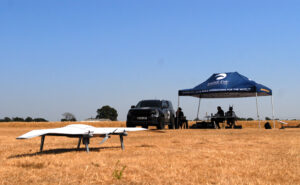
You need to have an RPC-L1 Aeroplane qualification to begin this course, as this will build upon the fundamentals of fixed wing flying to convert you to type on our impressive DeltaQuad Evo RPAS. What’s more, you will also learn how to use the exceptional Auterion Mission Planner, which is the brains of the operation when using DeltaQuad. This is a VLOS course only, although we have the ability to further expand on this into the BVLOS environment, provided the correct regulatory approvals are established. Experience this cutting-edge VTOL RPAS now and let us show you how it can further benefit your operations.
Our new 1-day Observers course is designed to expand your RPAS crewing capabilities and de-risk more complex operations through the provision of professionally qualified RPAS safety observers. Utilising proven aviation standards and procedures, our professional and
experienced instructors will guide you through the fundamentals of Crew Resource Management, crew communications, RPAS control and coordination and give you the practical experience you need to maximise the benefits of your RPAS for VLOS operations and beyond.
If you hold a valid GVC and want to convert to an RPC-L1 qualification in the same category of UAS, under the CAA you are exempt from conducting the theory elements of the course and may progress directly to the practical elements. Therefore, you simply need to book
onto either our conversion course or the practical days of a full RPC-L1 course (provided there is capacity to fit you in). This will provide you with the minimum of 2-hours flight instruction before you attempt the flight assessment. Proof of GVC validity will be required prior to conducting the training.
This course is designed to qualify you in either Rotorcraft or Aeroplane, noting that you only need to conduct the practical aspects of the course, provided you have successfully passed the full Level 1 course in the other discipline.
(Please note this does not include conversion onto our DeltaQuad platform; that is a bespoke course in its own right).
 Make an enquiry